
The Advantages of Modular Acoustic Panels for Flexible Noise Control
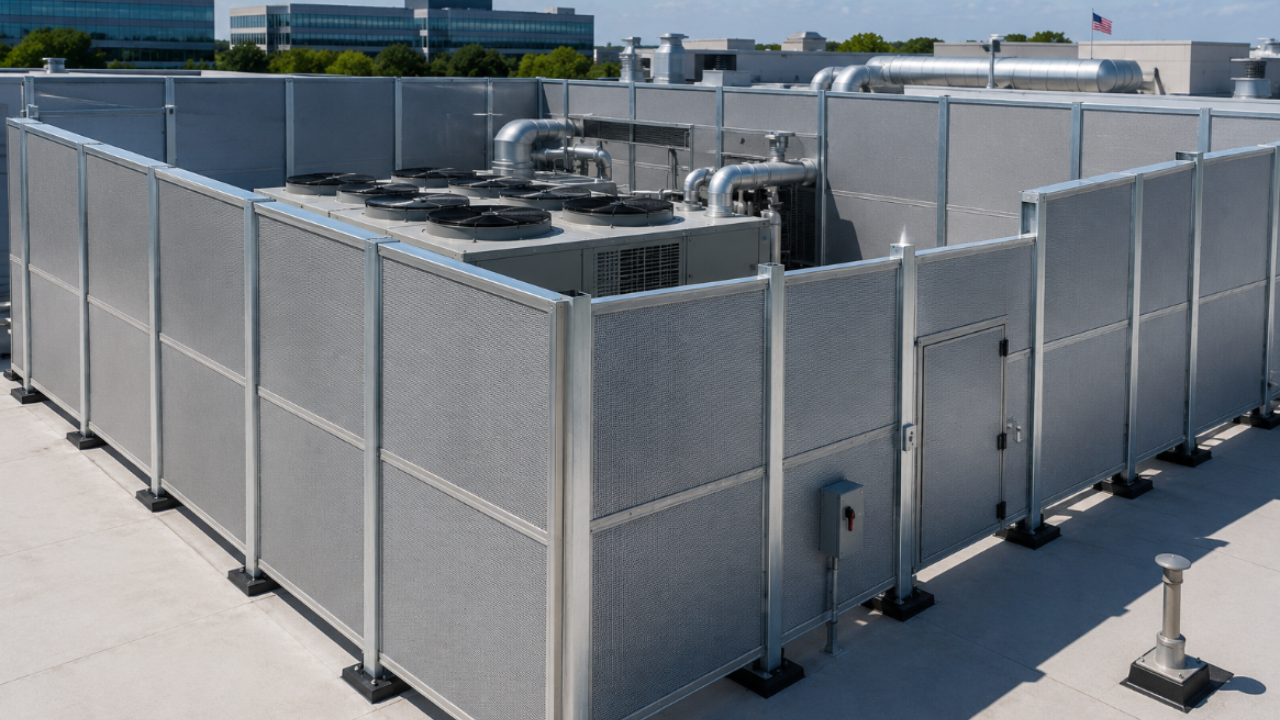
Modular acoustic panels solve a common facility problem: the space keeps changing after the acoustic treatment is installed. Equipment moves, office plans shift, and new sound paths can appear long after a fixed treatment is already in place. This article explains how modular panel systems support flexible noise reduction while preserving access, expansion, and future adjustment across commercial, industrial, mechanical, and office environments.
How Modular Acoustic Panels Create Flexible Noise Control
Modular panel systems give the acoustic plan room to change with the facility.
What Makes the System Modular
On the job, modular acoustic panels are pre-engineered sound-control components built in repeatable sections, then assembled into wall systems, equipment enclosures, barriers, plenums, or room treatments. That repeatable format allows the system to grow or shift without treating every adjustment as a custom field-built condition, while still combining acoustic function and layout flexibility in one coordinated system.
Why Changing Noise Paths Matter
Instead of treating noise control as a fixed condition, a modular system gives the facility team room to adjust when equipment, occupancy, or operating patterns change. In active facilities, noise conditions can change after the original buildout. A mechanical room may receive a new unit with a different sound profile, a production area may shift noise toward an occupied zone, or an open office may be divided into new work areas. In each case, the source, receiver location, and sound path can change after the original buildout.
That makes the installation strategy part of the long-term noise-control plan, not a one-time construction detail.
Why Installation Flexibility Matters After the First Buildout
Installation planning affects both the first buildout and the facility team’s ability to maintain the system later.
Retrofit and New Construction Constraints
Modular acoustic panels are especially useful during installation when the space already has constraints. Pre-engineered panel sections can be planned around the existing footprint and assembled to fit the available space. That can reduce field complexity in retrofit projects where walls, equipment, ductwork, doors, piping, and service clearances are already set.
It also helps new construction teams coordinate noise control earlier, before equipment rooms, rooftop layouts, or interior partitions become locked into final form. That early planning matters later, because the system still has to support maintenance, access, and equipment changes after installation.
Access After the System Is Installed
A facility may need to expand a barrier, open a panel run for maintenance, add access doors, revise penetrations, or adjust the system around replacement equipment. A fixed wall or custom-built field assembly may make those changes difficult. A modular acoustic system can be planned with service needs in mind, so the acoustic treatment does not become an obstacle every time maintenance crews need to reach panels, filters, controls, ducts, or equipment interfaces.
Access matters, but it cannot carry the project by itself. The system still has to match the acoustic problem being solved.
Sound Absorption, Sound Blocking, and Noise Reduction
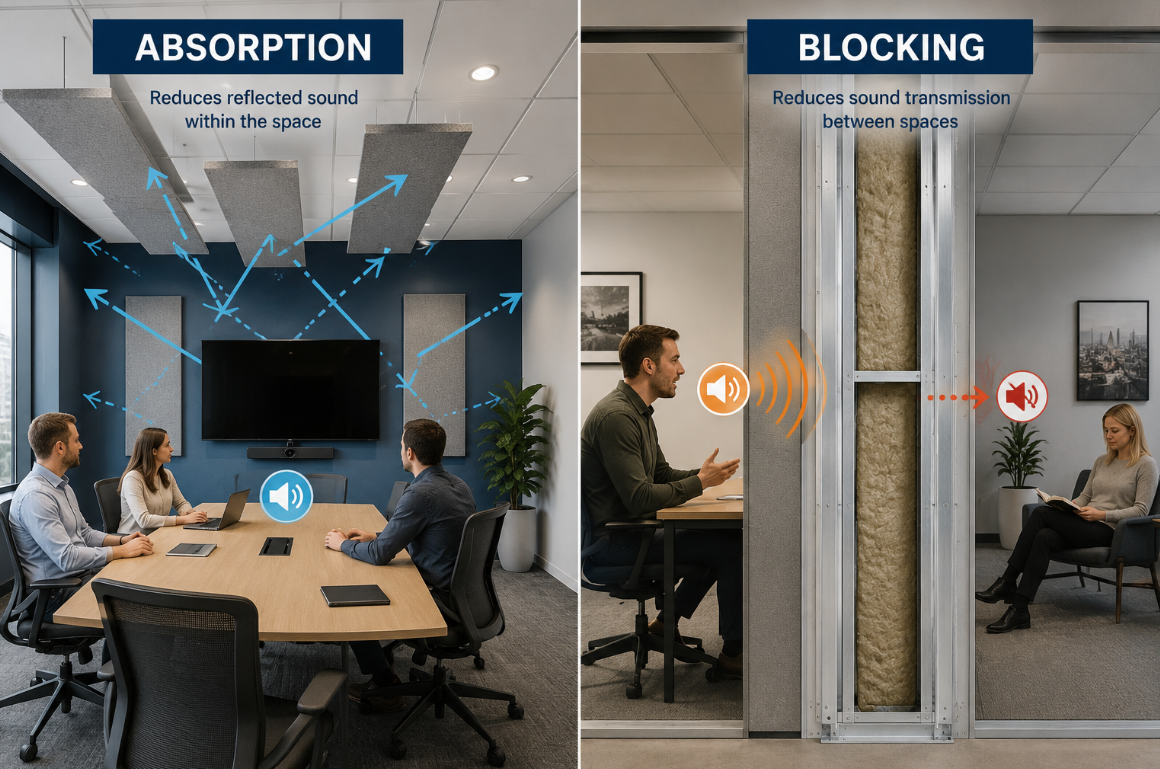
Acoustic performance depends on which sound problem the panel system is being asked to control.
Absorption Controls Reflected Sound
Sound absorption and sound blocking work together in many systems, but they do different jobs. Absorptive surfaces reduce reflected sound energy inside a room or enclosure, which can lower reverberation and make the space feel less harsh. That absorption can improve the sound inside the treated area, but it does not automatically stop sound from leaving the space.
Blocking performance depends more on mass, construction, sealing, and the ability to interrupt the direct sound path from the source to the receiver. A strong noise-control plan accounts for both conditions instead of assuming one panel type can solve every sound problem.
Engineered Systems Address Transmission Paths
That difference shows up quickly when decorative room treatments are compared with engineered modular systems. A light absorptive panel may improve the sound quality inside a conference room, training room, or open office, but it may do little to contain mechanical equipment noise. A heavier panel system with appropriate lining, sealed joints, and structural support can help absorb sound inside an enclosure and limit transmission to surrounding areas.
The right choice depends on the noise source, frequency range, installation location, and required level of control.
Where Modular Systems Fit in Commercial Facilities
Different facilities need different acoustic strategies, so modular systems should be evaluated by noise source, access requirements, and operating conditions.
Offices and Commercial Interiors
For offices and commercial interiors, modular acoustic panels can help reduce reflected sound and support broader privacy, distraction-control, and room-usability goals as layouts change. Teams can use panels to manage reflected sound in open work areas, meeting rooms, corridors, or shared spaces where hard surfaces allow noise to build.
Panel dimensions, surface finishes, and layout choices can also help the treatment fit the room while keeping the acoustic system coordinated with the surrounding space. In these environments, modularity is useful because acoustic needs often shift with occupancy, room use, and furniture plans.
Industrial and Mechanical Equipment Areas
In industrial and mechanical settings, modular acoustic panels often serve a more demanding role. They may be configured around HVAC systems, rooftop units, generators, pumps, compressors, process equipment, or machinery that creates concentrated noise.
In those cases, the system has to control sound and leave room for airflow, inspection, service access, structural support, and environmental exposure. Noise control cannot get in the way of the equipment. It has to fit around it.
Material and Configuration Choices That Shape System Fit
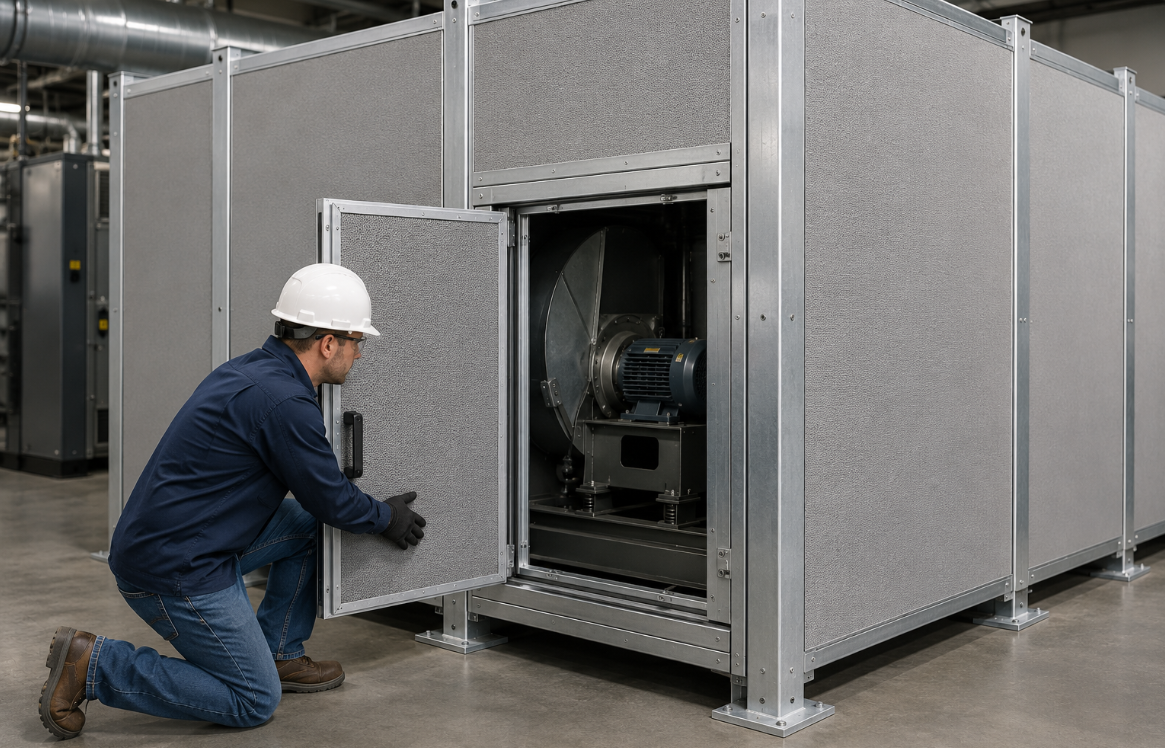
Material choices need to match the exposure, access, and acoustic demands of the installation. In some applications, modular acoustic wall panels may use metal skins, acoustic lining materials, sealed connections, corrosion-resistant finishes, service doors, or coordinated penetrations depending on the environment. Indoor office applications may emphasize appearance and absorption.
Rooftop or industrial systems may need stronger materials, weather resistance, equipment penetrations, and layouts built for daily operating conditions. The panel is only one part of the system; placement, detailing, and integration determine how well it performs in the field. Properly configured acoustical panels can combine absorption, blocking, access, and system detailing within a larger noise-control assembly.
How Modular Systems Support Phased Noise-Control Planning
The same modular logic can help facilities add noise control in phases:
- A facility may start with one noisy unit, then add equipment later.
- A tenant improvement may begin with a few treated rooms before expanding coverage across a larger floor plan.
- A plant may need temporary control during one phase and a larger permanent system after production increases.
Modular construction gives teams a practical path to add sections, extend coverage, or revise panel runs without treating the first installation as the final word. Phased installation can also make budgeting and operations easier to manage.
Some facilities cannot shut down a large area for an extended installation window. Others need to control the most disruptive noise source first, then address secondary paths after confirming field conditions. A modular system can help teams sequence the work in a way that aligns with access, scheduling, maintenance, and capital planning.
In those buildings, noise-control work has to fit around an operation that keeps moving. Outdoor equipment areas may also require barrier wall systems that can be configured around rooftop units, generators, chillers, or other stationary noise sources.
Selecting the Right Panel System for the Application
The right modular acoustic panels are selected from the actual conditions, not from a generic product category. The team should identify:
- noise source
- receiver location
- dominant sound path
- available space
- required access points
- airflow needs
- structural conditions
- exposure environment
It should also distinguish between reverberation problems inside a room and transmission problems between areas. Once those variables are clear, the panel system can be configured to match the acoustic target and the facility conditions.
That selection process helps separate a simple reverberation treatment from a more complete enclosure, barrier, or equipment-adjacent noise-control system. When the project requires that level of coordination, custom configuration becomes part of the acoustic plan.
Choose Commercial Acoustics for Custom Acoustic System Design
Commercial Acoustics designs customizable acoustic systems for commercial and industrial projects where noise control must work around equipment, access, airflow, and site conditions. Our team can help match panel construction, access needs, and system detailing to the application. Contact us today for more information.
FAQ
What Are Modular Acoustic Systems Used For?
Modular acoustic systems are used to reduce noise in commercial, industrial, mechanical, and office environments where the layout or equipment may change over time. They can be configured as wall systems, enclosures, barriers, or room treatments depending on the noise source and project conditions.
How Do Modular Panels Reduce Noise?
Modular panels reduce noise by using absorption, blocking, or a combination of both. Absorptive surfaces help reduce reflected sound inside a space, while heavier construction, sealed joints, and proper placement can help limit sound transmission from equipment or noisy areas.
Can Modular Acoustic Systems Be Reconfigured After Installation?
Many modular systems can be expanded, adjusted, or modified more easily than fixed field-built treatments. The level of reconfiguration depends on the panel design, installation method, access requirements, penetrations, and how the system was planned at the start.
What Should Be Considered Before Specifying Modular Acoustic Wall Panels?
A project team should identify the noise source, receiver location, sound path, available space, airflow requirements, access needs, structural conditions, and environmental exposure. Those factors determine whether the system should function as a room treatment, enclosure, barrier, or equipment-adjacent noise-control assembly.