
Acoustic Solutions For Noise Control In Power Generation Facilities
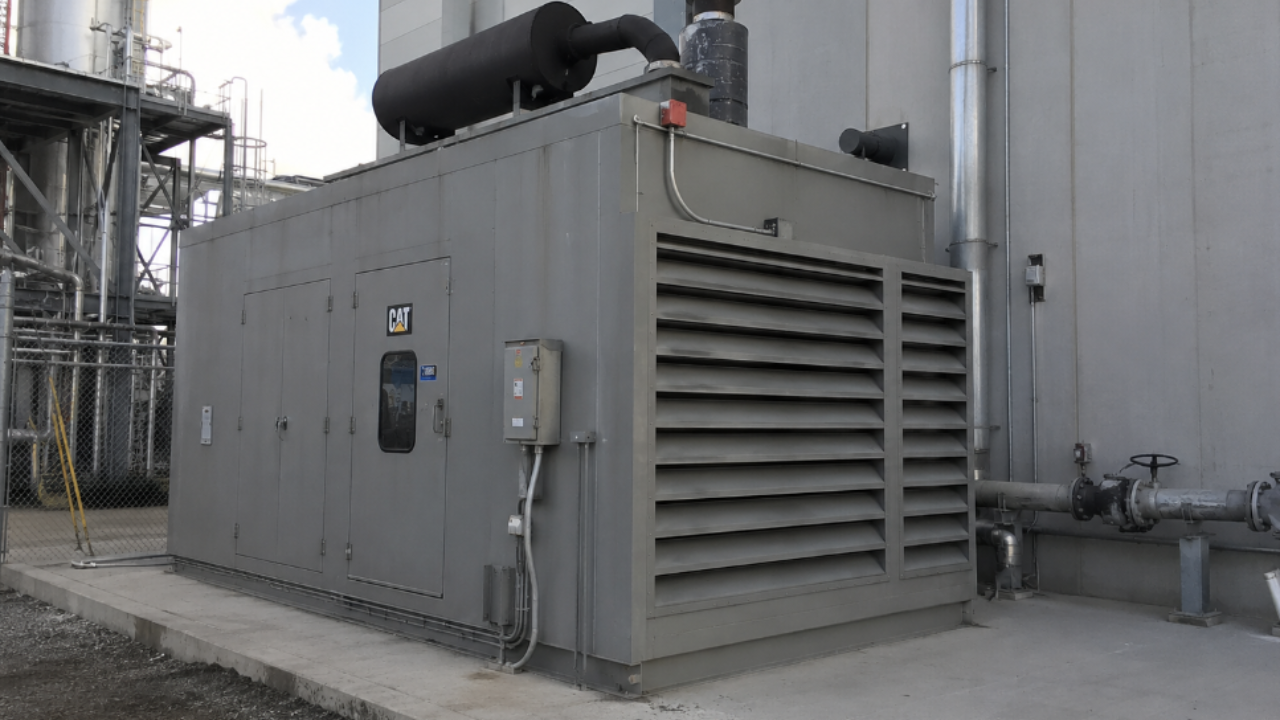
Noise in a power generation facility can limit options long before a formal measurement confirms a problem. Turbines, generators, transformers, cooling systems, compressors, fans, and exhaust paths create overlapping sound conditions that can affect workers, nearby properties, maintenance access, boundary conditions, and future capital decisions. Effective noise control in power generation facilities works best when plant teams evaluate equipment sources, sound paths, airflow, access, compliance pressure, and operating goals together.
Power Generation Noise Has Become A Facility-Wide Performance Issue
These plants operate around high-powered equipment that produces sound through mechanical movement, combustion, electrical activity, airflow, vibration, and exhaust. When each source is reviewed on its own, the plant can miss the cumulative effect of noise across operating areas, walkways, ventilation openings, exterior walls, and site boundaries.
That cumulative effect is where noise begins to affect operations. A loud generator may be the most obvious source, but nearby compressors, cooling equipment, transformers, and air-moving systems can shape the actual exposure conditions workers experience. Sound can reflect off hard surfaces, move through openings, travel through ducted paths, and reach neighboring properties even when the facility itself is operating as intended.
Over time, that acoustic friction can affect operational efficiency by making communication, inspection, maintenance access, and site coordination harder than they need to be. Facility leaders gain more room to act when they map where sound is created, how it travels, who receives it, and what the equipment still needs for ventilation, cooling, access, and safe operation.
The Loudest Asset Is Not Always The Whole Problem
It is natural to start with the loudest machine. It can also create a narrow solution when the actual risk is spread across the plant.
In power generation environments, noise control should follow a source-path-receiver mindset. The source may be a turbine, generator, compressor, transformer, cooling fan, exhaust outlet, or mechanical room. The path may be direct line-of-sight transmission, reflected sound, ducted airflow, structural vibration, or an exterior opening. The receiver could be a worker, control-room staff, maintenance technician, nearby business, residential area, or public agency responding to complaints.
That framework changes the decision. Instead of asking which product should be placed around one machine, facility teams can ask where noise is moving, what needs protection, and which control method fits the operating environment. The better answer may involve an enclosure at one source, an acoustic louver at a ventilation opening, a barrier along a transmission path, absorptive treatment inside a room, and silencers in intake or exhaust routes.
Noise Exposure Reaches Beyond Hearing Protection
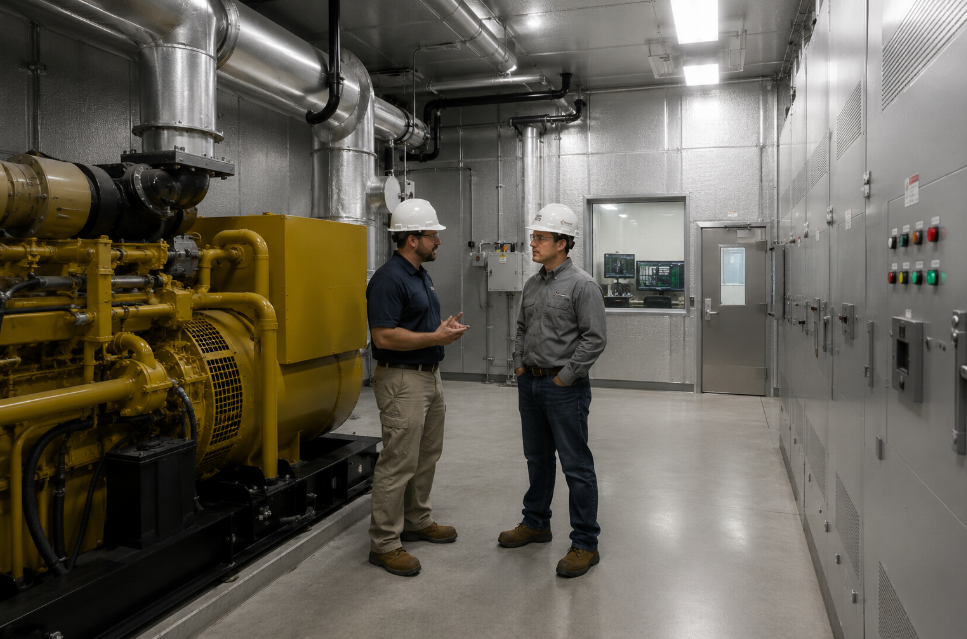
Hearing conservation is a major reason power generation teams take noise seriously. Occupational noise rules make exposure control a practical concern when sound levels approach applicable exposure thresholds.
Yet worker safety is not limited to hearing protection. Excessive sound can make verbal communication harder, add physical or psychological stress, mask warning signals, and reduce concentration during inspections or maintenance. Those problems can show up before a facility faces a formal enforcement issue.
Plant operators often work close to equipment that cannot simply be shut down or relocated. Maintenance teams may need access to pumps, compressors, ventilation equipment, and generator areas while systems are running or staged for service. Acoustic strategy should account for these routes and work zones so mitigation supports the people who operate and maintain the plant every day.
Noise Risk Does Not Stop At The Fence Line
Noise inside the facility is only part of the challenge. Sound that leaves the site can affect nearby receptors, especially where power generation assets operate near residential, commercial, institutional, or municipal properties.
Local noise ordinances, environmental noise expectations, permitting conditions, and complaint histories can all shape how facility noise is evaluated. A plant may be operating reliably from a production standpoint while still creating pressure at the boundary line. That pressure can affect community relations, regulatory attention, and stakeholder confidence.
A proactive acoustic strategy gives facility leaders more room to act before conditions narrow their options. It can help teams evaluate occupational exposure, exterior sound paths, mechanical ventilation openings, and boundary conditions before a complaint or compliance review forces a faster and more limited response.
Acoustic Strategy Must Protect Airflow, Cooling, And Maintenance Access
Noise control cannot be separated from plant function. Power generation equipment depends on airflow, cooling, combustion air, exhaust management, inspection access, and maintenance clearance.
An enclosure that reduces sound but traps heat creates a different problem. A barrier that blocks access can slow inspection and service work. A louver that reduces sound transmission must still preserve the airflow required by the system it serves. A silencer must be selected with attention to the path, operating conditions, and pressure considerations. That trade-off has to be engineered, not improvised.
Acoustic design has to protect the operating conditions that keep the plant usable. The goal is not to cover sound sources after the fact. The goal is to reduce noise while preserving the conditions the facility needs to operate, cool, vent, and maintain its equipment.
Engineered Acoustic Systems Must Match The Source, Path, And Receiver
Site-wide acoustic control starts by matching each system to a specific acoustic job. An enclosure, louver, barrier, absorber, or silencer should be selected according to the source, transmission path, receiver location, airflow requirement, and service environment.
In many plants, effective acoustic design combines multiple control methods rather than relying on a single product category. The right mix depends on where sound starts, how it travels, which workers, spaces, or nearby receptors receive it, and what the equipment needs to keep running safely.
Sound Enclosures Control Equipment-Area Noise
Sound enclosures are often used around high-noise equipment such as generators, compressors, turbines, and mechanical systems. Their role is to contain and reduce sound at or near the source while still allowing the equipment to be inspected, ventilated, and serviced.
In power generation facilities, enclosure planning should account for heat, access panels, doors, penetrations, airflow, and maintenance routines. An enclosure performs best when it fits the equipment’s operating requirements rather than treating noise reduction as a separate project.
Acoustic Louvers Address Noise Where Air Must Still Move
Ventilation openings often become weak points in acoustic planning. Cooling systems, mechanical rooms, and equipment enclosures often require air movement, yet those same openings can become sound paths.
Acoustic louvers help reduce sound transmission through these openings while supporting ventilation needs when properly sized and specified. They are especially relevant where air must move through walls, screens, enclosures, or mechanical spaces without leaving the sound path untreated.
Noise Barriers And Absorptive Materials Manage Pathways And Reflections
Noise barriers interrupt sound paths between equipment and receivers. They can be useful where line-of-sight transmission carries sound toward work areas, property lines, or sensitive parts of the facility.
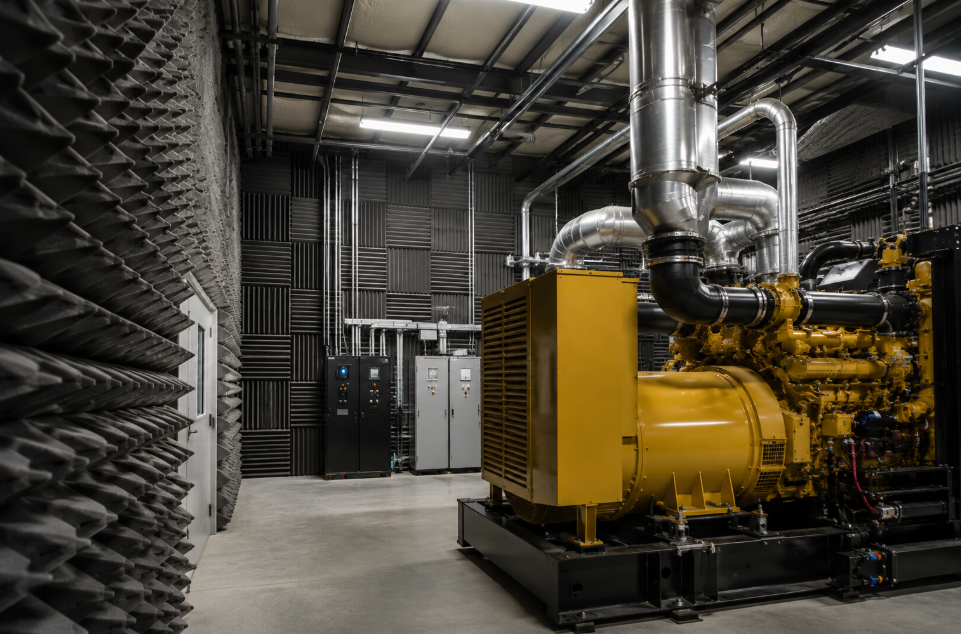
Sound-absorbing materials serve a different function. They reduce reflected sound inside enclosures, rooms, and equipment areas, helping control reverberant buildup rather than simply blocking transmission. In many plant environments, barriers and absorption work together because untreated reflected sound can weaken the overall acoustic strategy.
Silencers And Attenuators Treat Ducted, Intake, And Exhaust Paths
Some of the most persistent noise paths in power generation facilities move through air-handling, intake, exhaust, or ducted systems. Silencers and sound attenuators are used where sound travels through these paths and cannot be managed by barriers or wall treatments alone.
This category is especially important when equipment noise is tied to airflow. Treating ducted or exhaust paths requires attention to acoustic performance, pressure conditions, temperature, system layout, and maintenance access.
Proactive Noise Control Supports Long-Term Facility Resilience
Noise control often gets attention after a problem has already surfaced. A worker-exposure review, neighbor complaint, retrofit need, or equipment change can force acoustic decisions under pressure.
That reactive pattern limits the facility’s options. Late-stage fixes may need to work around installed equipment, restricted space, existing airflow patterns, and established maintenance routes. Earlier evaluation allows acoustic control to be coordinated with equipment layout, ventilation, structural design, site boundaries, and future modifications.
That is where resilience becomes practical. Noise management helps facility leaders plan for worker exposure, compliance readiness, community impact, and maintenance access so those pressures do not drive a rushed response. It also supports sustainability goals when those goals are defined through durable infrastructure, less reliance on disruptive retrofits, and responsible operation near workers and surrounding communities.
Plan Noise Control Before It Becomes A Constraint
Power generation facilities cannot eliminate noise from high-powered equipment, but they can manage it with better strategy. The strongest approach treats acoustic control as part of facility performance, not a correction added after the loudest source becomes a problem.
Facility managers, engineers, plant operators, and decision-makers should evaluate noise by source, path, receiver, airflow, access, and boundary impact before selecting individual acoustic products. That approach helps match sound enclosures, acoustic louvers, noise barriers, silencers, and sound-absorbing materials to the way the facility actually operates.
When power generation facilities evaluate long-term noise-control needs, Commercial Noise Control provides customized acoustic solutions for demanding industrial and power generation environments. Their team can help align acoustic planning with airflow needs, maintenance access, site boundaries, and noise-control goals.